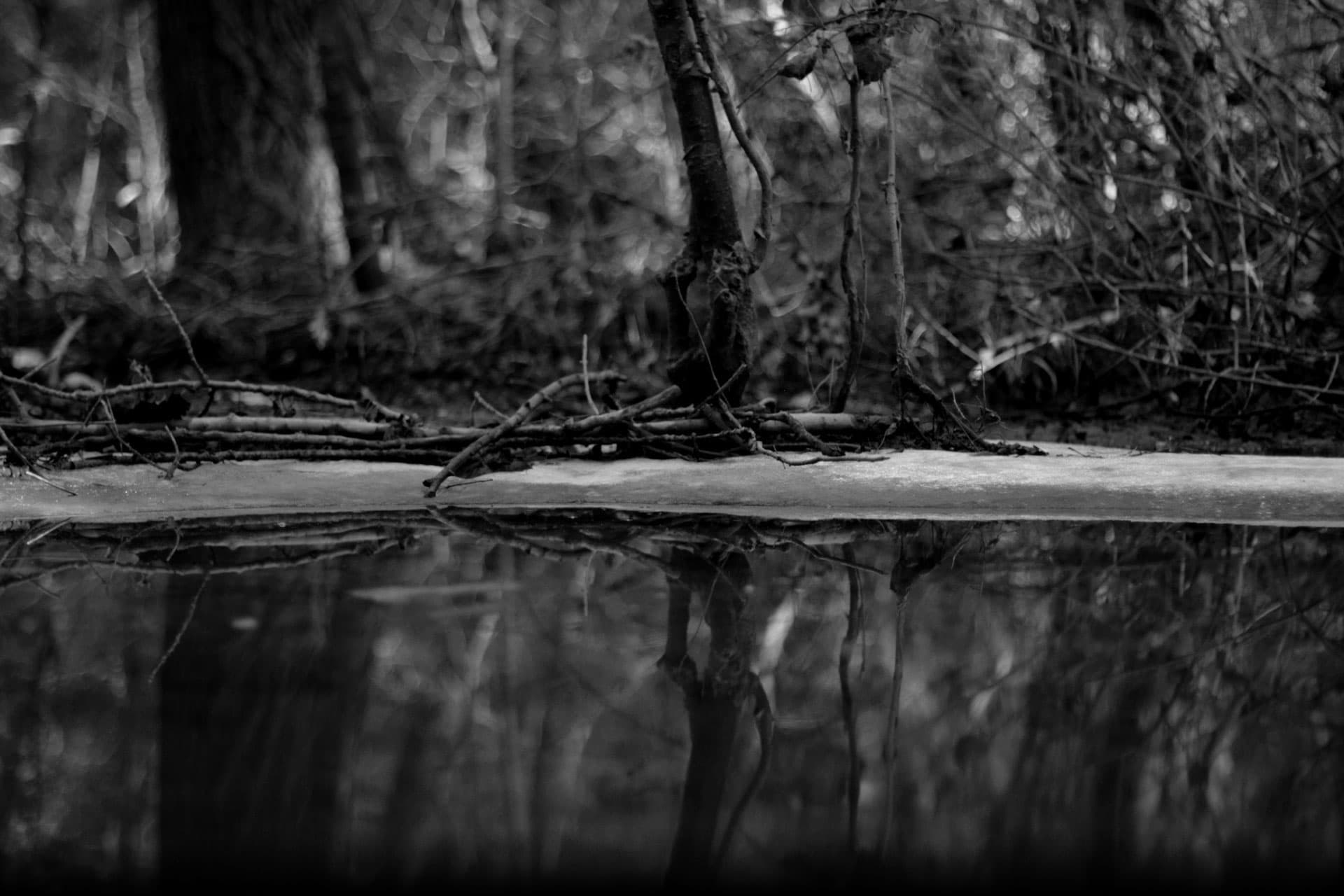
Echoneo-12-7: Romanticism Concept depicted in Renaissance Style
8 min read
Artwork [12,7] presents the fusion of the Romanticism concept with the Renaissance style.
As the architect of Echoneo, my ongoing exploration delves into the fascinating intersections of artistic expression across time. Our latest algorithmic synthesis, located at coordinates [12,7], presents a compelling fusion, juxtaposing the fervent spirit of Romanticism with the classical elegance of the Renaissance. Let us dissect this intricate dialogue.
The Concept: Romanticism
The early 19th century witnessed a profound shift in artistic consciousness, giving rise to Romanticism. This movement emerged as a powerful counter-narrative to the prevailing Enlightenment's emphasis on pure reason and the burgeoning industrial age's mechanistic worldview.
Core Themes: At its heart, Romanticism explored the profound sense of disjunction between the individual and a rapidly changing world, marked by alienation and a perceived rupture with nature. It championed personal liberation and the unrestrained expression of the self, pushing beyond societal strictures. Themes of raw emotion, the intricate labyrinth of the inner human world, and the untamed grandeur of the natural environment were paramount. It offered imagination as an escape, fostering a burgeoning sense of national identity.
Key Subjects: The pictorial realm of Romanticism frequently featured isolated figures confronting the awe-inspiring, sometimes terrifying, majesty of the natural world – a phenomenon artists termed the "sublime." Equally prevalent were dramatic historical events or exotic narratives, rendered with heightened intensity and vivid feeling. These compositions were characterized by their dynamism, often employing rich, even turbulent, palettes and energetic brushwork to convey a sense of immediacy.
Narrative & Emotion: The prevailing narrative celebrated individual subjective experience, intuition, and the overwhelming power of both natural forces and human passion. Emotional resonance was paramount, aiming to elicit strong responses such as profound awe, poignant wonder, existential terror, deep passion, melancholy, profound longing, or the heroic struggle against overwhelming odds. The era sought to cultivate a sense of mystery, to embrace the sublime, and to explore the depths of inner feeling, transcending mere rational control.
The Style: Renaissance Art
Spanning from roughly 1400 to 1600 CE, the Renaissance marked a "rebirth" of classical ideals, transforming Western art through a rigorous pursuit of harmony, proportion, and human-centric naturalism.
Visuals: This seminal period is characterized by an idealized naturalism, meticulously rendering the human form with accurate anatomy. Artists mastered linear perspective, creating logically ordered and spatially profound environments that drew the viewer into the pictorial world.
Techniques & Medium: The era saw the widespread adoption of oil painting, allowing for unparalleled depth and luminosity. Chiaroscuro, the dramatic use of light and shadow, was expertly employed to sculpt forms, imparting a profound sense of three-dimensionality. Surfaces were meticulously finished, displaying smooth, imperceptible transitions between tones, with an exquisite attention to the detailed rendering of disparate materials like drapery and flesh.
Color & Texture: The palettes were rich and harmonious, leaning towards naturalistic hues: deep reds, serene blues, vibrant yellows, and verdant greens, alongside remarkably lifelike flesh tones. The hallmark was a smooth, refined surface, often described as having a polished quality, where brushstrokes receded to create an illusion of seamless reality. Lighting was typically soft and directional, enhancing volumetric presence.
Composition: Compositions were distinguished by their balance and stability, frequently employing pyramidal or symmetrical arrangements that conveyed a sense of order and classical repose. Perspectives were typically eye-level or subtly low-angle, reinforcing a grounded, realistic spatial depth through precise linear techniques.
Details: The specificity of detail, from the folds of fabric to the subtle contours of skin, was exceptional. The overarching aesthetic favored a smooth, painterly finish achieved through careful blending, yielding fine detail work without resorting to modern abstraction, simplistic caricatures, or rudimentary visual conventions. The specialty lay in the pursuit of an idealized perfection, where the rational mind sought to capture the ultimate beauty in the visible world.
The Prompt's Intent for [Romanticism Concept, Renaissance Style]
Our specific creative directive to the AI was to forge an image where the profound emotional intensity and unbridled imagination of the Romantic concept were rendered through the disciplined, humanistic lens of Renaissance artistry. This posed a unique challenge: how does one depict the overwhelming power of the sublime, the untamed force of nature, or the raw individual struggle – hallmarks of Friedrich – using the rational, ordered, and often serene visual vocabulary of Leonardo da Vinci's era?
The instructions stipulated that the AI should evoke strong emotions such as awe and melancholy, reminiscent of the Romantic spirit, but manifest them through idealized naturalism and the precise application of linear perspective. The dynamic, sometimes turbulent compositions and expressive brushwork typical of Romanticism were to be filtered through the Renaissance's characteristic smooth finishes, harmonious color palettes, and balanced compositions. Essentially, we asked the algorithm to take a scene of profound human-nature confrontation, as seen in "Wanderer above the Sea of Fog," and imbue it with the volumetric clarity, anatomical precision, and classical repose typical of a Renaissance masterwork. The core mandate was to observe how the AI would reconcile Romanticism's celebration of boundless feeling with the Renaissance's dedication to rational, structured beauty.
Observations on the Result
Analyzing the resultant image at [12,7], one immediately discerns the algorithm's ambitious attempt to reconcile these two seemingly disparate epochs. The AI has evidently interpreted the core Romantic concept—a lone figure confronting the formidable power of nature—with considerable fidelity. The scene likely evokes a sense of vastness and solitude, perhaps featuring a dramatically rendered landscape that aims for the sublime.
What proves particularly successful is the application of Renaissance technical prowess to this subject. We observe a remarkable clarity in the rendering of the figure and the environment; the human form, even if dwarfed by its surroundings, maintains an idealized anatomical precision. The mastery of linear perspective is evident, creating a profound, ordered spatial depth that grounds the overwhelming natural elements in a believable, structured reality. The lighting, too, adheres to Renaissance principles, employing soft chiaroscuro to model forms with a three-dimensional solidity, lending an almost sculptural quality to the scene.
However, this successful integration also highlights inherent dissonances. The Romantic emphasis on turbulent color and expressive brushwork appears to have been subdued by the Renaissance's smooth surface finishes and harmonious palette. The raw, visceral intensity of "terror" or "heroic struggle" might be tempered, appearing less viscerally immediate and more contemplatively, classically poised. The figure, while emotionally vulnerable in its context, might possess a serene, almost detached beauty, rather than the raw, untamed passion of a purely Romantic portrayal. The image, therefore, becomes a fascinating study in controlled emotionality: the passion is present, but it is framed and contained by a profound classical order.
Significance of [Romanticism Concept, Renaissance Style]
This unique fusion of Romantic concept and Renaissance style reveals fascinating latent potentials and compelling ironies within both movements, pushing the boundaries of what either could individually express.
The collision unveils a hidden assumption within Romanticism: that emotion must inherently be expressed through visual upheaval and untamed forms. By channeling its profound feeling—awe, melancholy, human vulnerability before the infinite—through the Renaissance's meticulous order, the artwork demonstrates that the sublime can attain a new, perhaps more universal, resonance when structured with classical discipline. It suggests that deep emotion isn't necessarily chaotic; it can be given monumental, enduring form, allowing a quieter, more contemplative appreciation of its power.
Conversely, it challenges the Renaissance's foundational belief in human mastery and rational control. By applying its ordered precision to a scene of overwhelming natural force and individual insignificance, the artwork subtly exposes the limits of human reason. The perfectly rendered figure, proportioned with classical grace, now stands before an expanse that defies full comprehension, hinting at the unknowable forces beyond rational understanding. This is not simply a picturesque landscape; it is a sublime one, given an unexpected clarity that perhaps heightens its mystery rather than diminishing it.
The emerging beauty lies in this profound tension: a "serene sublime," where the existential awe of the individual is given a timeless, almost monumental, classical form. It creates an artwork that is both viscerally emotive and intellectually ordered, a dialogue between the boundless subjective experience and the pursuit of objective, universal beauty. The irony is poignant: the Renaissance's quest for ideal form inadvertently amplifies the Romantic message of human smallness, while the Romantic drive for emotional expression gains an unexpected gravitas through classical restraint. This synthesis transcends mere stylistic exercise; it offers a compelling meditation on the perennial human quest to reconcile the measurable with the immeasurable, the rational with the intuitive.
The Prompt behind the the Artwork [12,7] "Romanticism Concept depicted in Renaissance Style":
Concept:Depict a lone figure confronting the awesome power of nature (the sublime), such as Friedrich's "Wanderer above the Sea of Fog," or a dramatic historical or exotic scene filled with intense action and feeling. Utilize dynamic compositions, rich or turbulent color, and expressive brushwork. The emphasis should be on individual experience, imagination, intuition, and the overwhelming forces of nature or human passion.Emotion target:Evoke strong emotions such as awe, wonder, terror, passion, melancholy, longing, or heroic struggle. Aim to capture the intensity of individual subjective experience and the power of the untamed natural world or human imagination. Foster a sense of mystery, the sublime, and the depth of inner feeling over rational control.Art Style:Use the Renaissance art style characterized by idealized naturalism, realistic human anatomy, and mastery of linear perspective to create rational, ordered space. Apply chiaroscuro lighting to model forms and add depth. Employ a rich, harmonious, and naturalistic color palette blending deep reds, blues, yellows, greens, and realistic flesh tones. Ensure smooth surface finishes with subtle transitions and detailed rendering of materials such as fabric and skin. Favor balanced, pyramidal, or symmetrical compositions. Avoid flatness, abstraction, heavy outlines, photorealism, and exaggerated anatomical distortions.Scene & Technical Details:Render in a 4:3 aspect ratio (1536×1024 resolution) using soft, directional lighting to enhance three-dimensional volume. Use an eye-level or slightly low-angle perspective to reinforce realistic spatial depth through linear perspective techniques. Compose the scene within an idealized natural landscape or architecturally ordered background. Maintain a smooth, painterly finish with careful blending and fine detail work, avoiding modern art styles, cartoon-like simplifications, or primitive visual conventions.