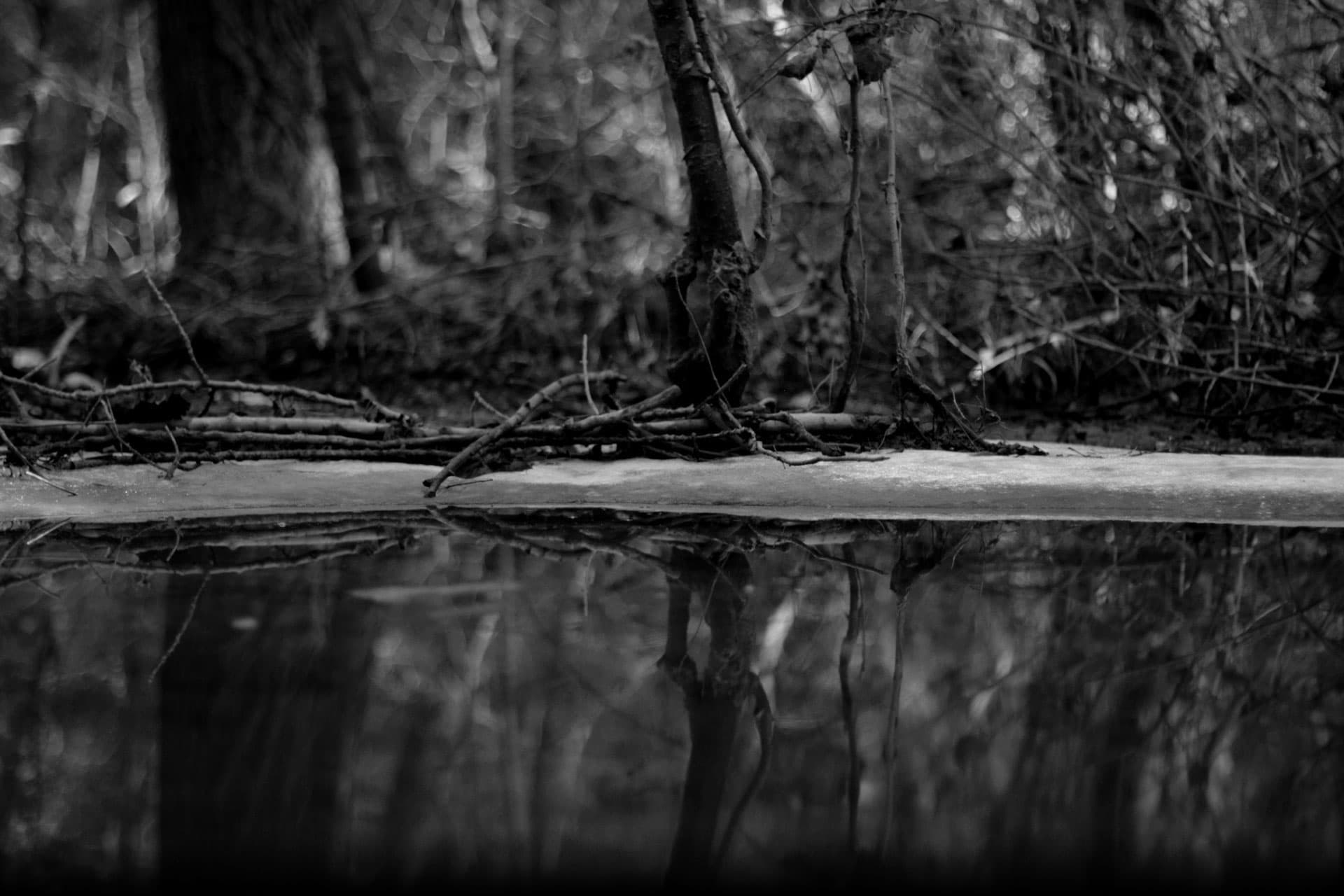
Echoneo-22-21: Abstract Expressionism Concept depicted in Surrealism Style
6 min read
Artwork [22,21] presents the fusion of the Abstract Expressionism concept with the Surrealism style.
As the architect of Echoneo, I find immense fascination in the digital crucible where historical art movements are re-imagined, their inherent principles pressed into novel forms. Our latest AI-generated piece, designated [22,21], presents a compelling synthesis of two titans of 20th-century art: the visceral liberation of Abstract Expressionism as its conceptual core, and the disquieting lexicon of Surrealism as its expressive mode. Let us delve into the profound implications of this digital alchemy.
The Concept: Abstract Expressionism
At its genesis, Abstract Expressionism was not merely a style but a testament to profound human experience. It emerged from the crucible of post-war disillusionment, a fervent search for intrinsic meaning in a fractured world. This radical artistic stance aimed to transcend objective reality, championing the subjective, the intuitive, and the subconscious.
- Core Themes: This movement probed themes of existential anxiety, the individual's solitary struggle, and the unmediated expression of primal human urges. It became a powerful conduit for articulating the ineffable and the tragic beauty of human vulnerability.
- Key Subjects: Eschewing conventional representation, the true subject became the raw gesture itself—the very act of creation. The canvas transformed into an arena for psychic liberation, reflecting the artist's interior landscape and the profound materiality of paint.
- Narrative & Emotion: There was no conventional story, but an immersive emotional resonance. The works were designed to evoke powerful, direct spiritual or psychological responses. Whether through the frenetic energy of "Action Painting" or the contemplative depth of "Color Field" painting, the aim was to induce states of awe, introspection, or even raw, unbridled chaos, forging an intimate encounter with the artwork's emotional presence.
The Style: Surrealism
Surrealism, conversely, was a profound intellectual and artistic revolution, meticulously mapping the uncharted territories of the human mind. Its primary objective was to unlock the boundless power of the unconscious, to explore the realm of dreams, and to orchestrate unexpected, irrational juxtapositions.
- Visuals: The movement’s visual vocabulary was defined by bizarre, unrelated elements placed in illogical contexts, creating scenes that defied rational explanation. It embraced surprising scale shifts, metamorphic transitions, and organic, biomorphic abstractions, often imbued with potent psychological symbolism.
- Techniques & Medium: Techniques ranged from the precise, almost photographic rendering of "Veristic Surrealism" to the spontaneous, subconscious generation of forms through "Abstract Surrealism," employing methods like automatism. While oil painting was a frequent choice, the emphasis was on facilitating the emergence of imagery from the deepest psyche.
- Color & Texture: Works often featured soft, ethereal illumination or a flat, ambient glow, casting no definitive shadows. Textures could be meticulously smooth and polished, emphasizing hyperrealistic detail, or expressively tactile, incorporating techniques like frottage or grattage to evoke subconscious tactile sensations.
- Composition: Compositions frequently embraced illogical spatial arrangements, ambiguous or deeply receding perspectives, and elements that appeared to float untethered in undefined environments, completely subverting traditional pictorial logic.
- Details & Speciality: The distinctive characteristic of Surrealism lay in its uncanny details and potent psychological charge. It prioritized the creation of dreamlike atmospheres and subconscious associations, deliberately forsaking rational structure in favor of deeply felt, often unsettling, subjective realities.
The Prompt's Intent for [Abstract Expressionism Concept, Surrealism Style]
The creative challenge presented to our AI was not merely to hybridize two distinct movements, but to forge an ontological fusion. The instruction was to internalize Abstract Expressionism’s core conceptual drive—its yearning for unmediated emotional release and the visualization of existential struggle—and articulate it through Surrealism’s idiosyncratic visual grammar.
Specifically, the AI was tasked with translating the raw energy of Pollock’s spontaneous gestures or the luminous fields of Rothko’s profound contemplation into a realm where melting forms, illogical scale, and dream-logic spatial arrangements prevail. Could the subconscious outpouring of paint, so central to Abstract Expressionism, become the very substance of a Dalí-esque dreamscape? Or might Rothko’s contemplative void be rendered with the disquieting precision of a Giorgio de Chirico landscape, subtly shifting into an unsettling, irrational vista? The mandate was to explore how a non-representational, deeply felt emotional state could manifest as a bizarre yet cohesive subconscious narrative, creating a visual paradox where the abstract gains uncanny specificities, and the specific dissolves into pure, unbridled emotion.
Observations on the Result
The visual outcome of this audacious prompt is a testament to the AI’s interpretative prowess. One immediately discerns the energetic traces characteristic of Abstract Expressionism: broad, sweeping gestures or vast chromatic expanses. However, these are unsettlingly imbued with a Surrealist vocabulary. The expected spontaneous drips might coalesce into the melting contours of an impossible object, or perhaps form the very fabric of a hyper-detailed, yet illogical, environment.
The triumph lies in the AI’s ability to imbue the often-chaotic spontaneity of Abstract Expressionism with a sense of deliberate, subconscious intention. The luminous fields, rather than being purely contemplative, may reveal subtle, disorienting shifts in perspective or contain floating, biomorphic forms that defy gravity. The soft, dreamlike illumination stipulated by the Surrealist style softens the inherent aggression of Action Painting, transforming raw anxiety into a strangely meditative, albeit unsettling, experience. Conversely, the precise rendering of "Veristic Surrealism" might be applied to forms that simultaneously suggest abstract explosions of color and the uncanny precision of a dream-vision. The success lies in the artwork’s capacity to initially present as abstract, only to slowly reveal an underlying, deeply unsettling, subconscious narrative.
Significance of [Abstract Expressionism Concept, Surrealism Style]
This specific fusion illuminates a profound, often overlooked, intellectual kinship between these two seemingly disparate art movements. While Abstract Expressionism externalized raw, unmediated psychic energy, and Surrealism explored the realm of dreams and the unconscious through symbolic representation, both were deeply concerned with the uncharted territories of the human mind beyond rational thought.
This collision reveals that the "existential struggle" so central to Abstract Expressionism can manifest not just as an abstract outpouring, but as the very bizarre landscape of a personal nightmare or a shared collective unconscious. The spontaneity of the gesture, when filtered through Surrealism, is no longer merely an act of pure expression, but perhaps a manifestation of psychic automatism made visible, where every splash and drip contributes to an irrational, symbolic order. Conversely, the often-calculated oddity of Surrealist juxtapositions gains an unexpected visceral power, feeling less like intellectual games and more like genuine eruptions from the psyche. The irony lies in the highly controlled nature of Surrealist depiction being used to convey the explosive, uninhibited spirit of Abstract Expressionism. The beauty emerging from this tension is an artwork that simultaneously feels like an uncontrolled eruption of internal chaos and a meticulously curated, deeply unsettling dream, suggesting that our deepest emotional truths reside precisely where logical frameworks dissolve and the subconscious speaks in uncanny symbols.
The Prompt behind the the Artwork [22,21] "Abstract Expressionism Concept depicted in Surrealism Style":
Concept:Visualize a large canvas covered in dynamic, energetic drips and splatters of paint (like Pollock's Action Painting), emphasizing the physical process and spontaneous gesture. Alternatively, imagine vast fields of luminous, contemplative color that seem to envelop the viewer (like Rothko's Color Field painting). The work should be non-representational, focusing on the expressive qualities of paint, color, texture, and scale.Emotion target:Evoke powerful, direct emotional or spiritual responses through abstract means. Action Painting might convey energy, anxiety, chaos, or raw feeling. Color Field painting might inspire awe, transcendence, introspection, or profound calm. The aim is often an immersive, personal encounter with the artwork's emotional presence.Art Style:Apply the Surrealist style by exploring dreams, the unconscious, and irrational juxtapositions. Create scenes populated with bizarre, unrelated elements placed in unexpected and illogical contexts. Emphasize either hyperrealistic, meticulously detailed rendering to heighten the dreamlike strangeness (Veristic Surrealism) or abstract, biomorphic forms generated through automatism and subconscious techniques (Abstract Surrealism). Incorporate surprising scale distortions, metamorphosis, organic abstractions, and psychological symbolism. Use either smooth, polished textures for detailed works or free, spontaneous surface treatments for abstract expressions.Scene & Technical Details:Render the work in a 4:3 aspect ratio (1536×1024 resolution) using soft, dreamlike lighting or a flat, ambient glow without clear directional shadows. Compose the scene with illogical spatial arrangements, deep or ambiguous perspective, or free-floating elements in undefined environments. Simulate either smooth, highly finished textures or expressive, textured effects like frottage or grattage depending on the sub-style. Prioritize surreal atmospheres, uncanny details, and emotionally charged or subconscious-driven associations over rational structure or traditional realism.