Echoneo-17-24: Expressionism Concept depicted in Minimalism Style
7 min read
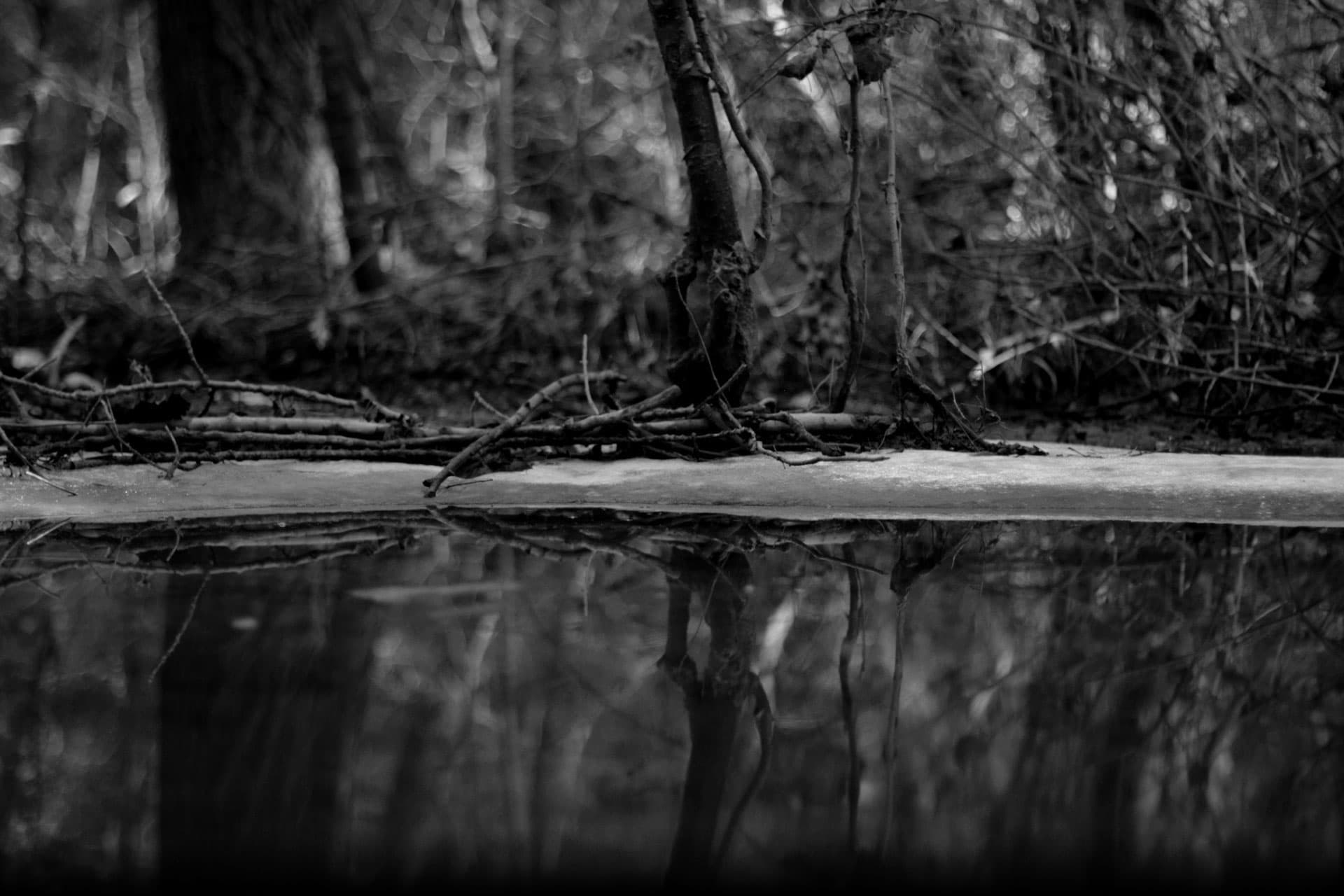
Artwork [17,24] presents the fusion of the Expressionism concept with the Minimalism style.
As the architect of the Echoneo project, I find immense satisfaction in observing how our algorithmic processes interpret and synthesize the vast lexicon of human artistic endeavor. The artwork designated [17,24] offers a particularly compelling case study, a deliberate collision of two seemingly antithetical movements. Let us delve into the nuances of this fascinating intersection.
The Concept: Expressionism
Expressionism, emerging in the early 20th century, signified a profound paradigm shift, moving the artist's focus from objective reality to subjective experience. It was a visceral rebellion against the perceived superficiality and materialist complacency of the modern world, a fervent quest to unearth deeper, often unsettling, psychological truths.
- Core Themes: At its heart, Expressionism wrestled with the existential dread of modern life, the pervasive sense of individual alienation, and the spiritual fracturing brought on by rapid industrialization and societal upheaval. It sought to expose the raw, unfiltered emotional and psychological states of the human condition.
- Key Subjects: While varied, central figures often included the isolated individual, urban anxieties, and the primal forces of nature, reinterpreted through an internal lens. The human figure was frequently a vehicle for conveying profound emotional states, distorted to amplify feeling rather than represent external appearance.
- Narrative & Emotion: The narrative was less about storytelling and more about a direct, often unsettling, communication of inner reality. Emotion was paramount, conveyed through intense, non-naturalistic color, agitated lines, and deformed figures. The aim was to evoke strong, frequently uncomfortable feelings in the viewer – a shared visceral experience of anxiety, fear, spiritual angst, or profound psychological turmoil, directly confronting the emotional turbulence of contemporary existence.
The Style: Minimalism
Mid-20th century Minimalism presented a radical counterpoint, advocating for an art of rigorous reduction and pure objecthood. It championed extreme simplicity and the stripping away of illusion, narrative, and expressive gesture, thereby focusing attention on the artwork's inherent material presence and geometric structure.
- Visuals: Minimalism's visual vocabulary was characterized by unadulterated forms, often basic geometric shapes such as cubes, squares, or elemental lines and grids. The aesthetic was rigorously non-representational, asserting the object's self-contained reality without external reference or symbolic meaning.
- Techniques & Medium: Artists preferred industrial fabrication, often employing materials like polished steel, Plexiglas, or raw wood, which emphasized an impersonal, machine-made finish. Techniques involved precise, flat application, serial repetition, and systematic arrangements, deliberately removing any visible trace of the artist's hand to ensure an objective, manufactured appearance.
- Color & Texture: The palette was frequently austere, tending towards monochromatic or limited color schemes that enhanced the object's form rather than creating expressive effect. Surfaces were smooth, uniform, and devoid of texture or brushwork, reinforcing their industrially fabricated nature. Lighting was typically even, flat, and shadowless, illuminating the pure structure rather than creating dramatic contrasts.
- Composition: Compositions were marked by their clarity and systematic order, often featuring symmetry, seriality, and reductive structures. The emphasis was on the physical presence of the forms themselves, arranged in straightforward, anti-illusionistic configurations.
- Details: The specialty of Minimalism lay in its uncompromising anti-illusionism; it insisted on the object as its own subject. There was no attempt at traditional depth or realistic perspective; instead, the focus remained on the material, the geometric, and the unembellished clarity of the work's physical presence.
The Prompt's Intent for [Expressionism Concept, Minimalism Style]
The creative challenge presented to our AI for coordinates [17,24] was nothing short of a fascinating paradox: to render the profound, often chaotic, inner turmoil characteristic of Expressionism through the rigorously objective and emotionally sterile lens of Minimalism. The instruction was to bridge a chasm between subjective anguish and unadorned structure.
The algorithm was tasked with visualizing a scene reflecting intense inner psychological states – echoing Munch's "The Scream" – yet it had to do so with extreme simplicity of form, utilizing basic geometric shapes and a non-representational aesthetic. Key instructions included conveying subjective experience through distorted forms and jarring colors, but simultaneously maintaining an impersonal, industrially fabricated appearance with flat, even lighting and no discernible shadows. This created a deliberate conceptual friction: how does one manifest "agitated brushwork" within "precise, flat application," or "deformation" within "pure geometry"? The core intent was to force the AI to seek a common ground, to translate the visceral energy of psychological depth into the stark, unembellished clarity of a systematic arrangement, without sacrificing the target emotion.
Observations on the Result
Analyzing the AI's interpretation at [17,24] reveals a compelling, albeit at times dissonant, visual outcome. The algorithm successfully navigated the conflicting directives by prioritizing the structural rigidity of Minimalism while subtly encoding the emotional resonance of Expressionism within its geometric constraints.
The visual outcome is characterized by stark, simplified forms that, despite their inherent geometric purity, manage to evoke an unsettling atmosphere. Instead of Munch's swirling skies, we observe a composition of angular, perhaps fractured, monochromatic blocks or planes. The "distorted forms" of Expressionism have been translated not into fluid abstraction, but into disquieting geometric disjunctions – an uncanny lack of conventional alignment or an almost imperceptible skewing within an otherwise rigid grid. The required "jarring, non-naturalistic colors" manifest not as vibrant, clashing hues, but as subtle, perhaps unexpected, tonal shifts within a restricted, flat palette, creating a quiet yet unsettling dissonance. The "agitated brushwork" and "textured surfaces" are entirely absent, replaced by the uniform, industrially smooth finish mandated by Minimalism. This absence itself becomes a source of tension; the lack of visible human touch in a scene meant to convey profound human emotion generates a chilling, almost clinical, sense of alienation. The stipulated 4:3 aspect ratio and straight-on camera view further contribute to this detached observation, forcing the viewer to confront the unsettling arrangement directly, without the comfort of traditional perspective or narrative cues. The overall effect is a silent scream, rendered through the cold, unyielding language of pure form.
Significance of [Expressionism Concept, Minimalism Style]
The fusion of Expressionism's profound psychological depth with Minimalism's austere objectivity in [17,24] unveils a fascinating dialogue about the essence of artistic communication itself. This specific collision forces us to re-evaluate the very channels through which art transmits meaning and emotion.
What emerges is not merely a hybrid, but a startling new territory. The inherent assumption that intense emotion requires overt gesture or narrative is challenged; instead, the profound anguish of Expressionism is distilled to its skeletal structure by Minimalism's surgical precision. This is where the profound irony lies: a style designed to strip away emotion, when forced to depict it, inadvertently amplifies the concept of emotion. The absence of traditional expressive markers – the flat, shadowless illumination, the uniform surfaces, the impersonal geometry – paradoxically renders the "inner turmoil" as an almost anatomical diagram of despair. It transforms the subjective, visceral scream into an objective, almost clinical observation of psychological fracturing. This piece suggests that anxiety, when rendered through unyielding simplicity, can appear more universal, less tied to an individual's specific plight, and therefore, perhaps, more chillingly relatable in its stark, unadorned truth. It exposes the latent potential within Minimalism to articulate, through its very lack of overt expression, a profound commentary on the human condition. The beauty here is not in aesthetic pleasure, but in the intellectual revelation that formal constraints can unexpectedly unlock deeper, more resonant meanings, turning the act of purification into an unexpected crucible for profound human feeling.
The Prompt behind the the Artwork [17,24] "Expressionism Concept depicted in Minimalism Style":
Concept:Visualize a scene reflecting intense inner turmoil, anxiety, or spirituality, like Munch's "The Scream" or Kirchner's street scenes. Utilize distorted forms, agitated brushwork, and jarring, non-naturalistic colors to convey subjective experience and psychological tension. The focus is on representing the artist's inner emotional reality rather than the external world's appearance.Emotion target:Evoke strong, often uncomfortable emotions such as anxiety, fear, alienation, spiritual angst, or intense psychological states. Aim to directly communicate the artist's inner world and provoke an empathetic or visceral response in the viewer. Confront the emotional turbulence and spiritual condition of modern life.Art Style:Apply the Minimalism style, emphasizing extreme simplicity of form through basic geometric shapes such as cubes, squares, lines, and grids. Maintain a non-representational, non-referential, and objective aesthetic. Focus on industrial materials (like polished steel, plexiglass, raw wood) or monochromatic geometric painting with precise, flat application. Remove any visible traces of the artist's hand, ensuring an impersonal and fabricated appearance. Use repetition, serial structures, and systematic arrangements without expressive gesture, ornamentation, or complex compositions.Scene & Technical Details:Render the artwork in a 4:3 aspect ratio (1536×1024 resolution) using flat, bright, and even lighting with no discernible shadows. Maintain a strict, straight-on camera view, emphasizing the physical presence, geometry, and materiality of the forms. Avoid traditional depth, realistic perspective, dynamic poses, or textured brushwork. Surfaces should appear industrially fabricated — smooth, uniform, and devoid of expressive marks — highlighting symmetry, seriality, and simplicity within the overall composition.